
VfL exists as a charity to support older vegans and vegetarians to live well and in line with their deeply-held beliefs. We know that age can bring greater vulnerability, especially when formal care is required. Dementia and fluctuating mental capacity add further layers of complexity, and vulnerability.
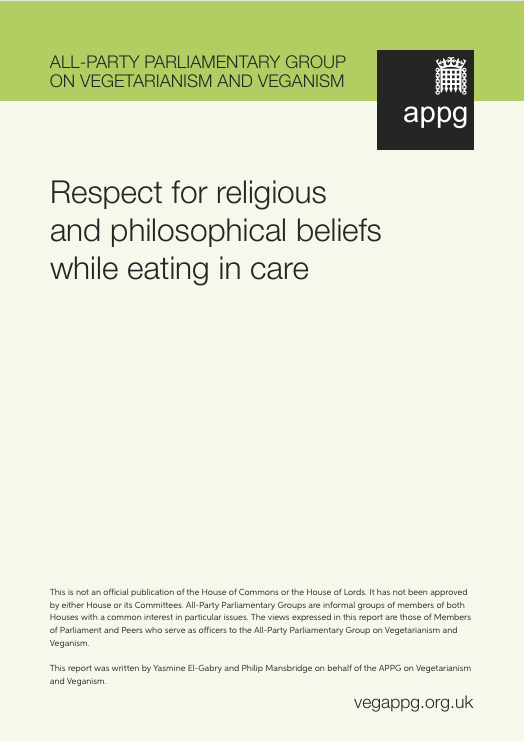
Working with the All-Party Parliamentary Group on Vegetarianism and Veganism, we conducted an inquiry into respect for religious and philosophical beliefs while eating in care. Sad to say, and while there is plenty of good practice (which we will look at later in the week), our inquiry found several examples where individual dietary preferences were disregarded.
My husband’s vegetarian diet was one of the last remaining parts of his identity. Knowing that he ate meat and the care worker said that he enjoyed it hurt me; my husband would have never eaten that.
Evidence seen by the inquiry included vegans and vegetarians being served meat or animal products, sometimes repeatedly, and in some cases without their knowledge. One family described a long-term vegetarian relative being given meat-based meals after entering residential care, with staff attributing it to ‘confusion’ rather than investigating further. In another case, relatives raised concerns that a vegan resident was being offered limited or nutritionally inadequate options, leading to anxiety about whether their needs were properly understood.
Across submissions, there was a broader pattern of poor communication and record-keeping, with families often unsure what their loved ones had been fed. Taken together, these examples point to a system in which deeply held dietary beliefs are not always recognised or embedded into everyday care.
To these examples we can add the recent case, highlighted across Scottish media, of a 93-year-old vegetarian woman in Kilmarnock who was left to survive for several months on dry cheese sandwiches after being served meat in a care home. As her daughter put it:
Mum has been a strict vegetarian for over 70 years but her food was just one example of failing to provide basic care, it exploited her vulnerability. They were being paid to care for an elderly person but didn’t.
What is striking in these cases is that they are not simply about food provision, but about a failure to recognise and respect deeply held philosophical beliefs. For most vegetarians and vegans, diet is not a preference that can be set aside, but a core part of identity, grounded in long-standing ethical commitments. These beliefs are protected in law, yet the evidence suggests they are not consistently treated with the same seriousness in care settings as other aspects of person-centred support.
On Wednesday, we’ll take a look at how our research into the relationship between diet and identity casts further light on these issues. And later in the week, we’ll be talking about what can be done, and discussing some of the practical tools individuals and care establishments can use.
Categories:
Articles
Life After Retirement