
Care providers play a vital role in ensuring that residents’ dietary beliefs are respected as part of person-centred care. This includes vegan and vegetarian choices that are rooted in long-held ethical, cultural, or religious beliefs.
A recent case highlighted by Vegetarian for Life – and covered today in the Scottish Sun – shows what can happen when these needs are not properly understood or recorded. The story also ran in Scotland’s national newspaper, the Daily Record, in February.
The case involved an older woman living with dementia whose strict vegetarian diet had been followed for more than 60 years. Despite this, she was repeatedly served meat and fish in a care setting, causing distress to both her and her family. With support and guidance, the family was able to advocate successfully, and she has since moved to a home where her beliefs are respected.
You can read the full story and its wider context here.
Why this matters in care settings
Vegetarian and vegan beliefs are not simply 'food preferences'. They are often deeply connected to identity, values, dignity, and human rights.
Care providers should ensure that:
Practical guidance for care providers
Vegetarian for Life and the Care Inspectorate have jointly produced practical guidance to support good practice.
A key resource, Good Care for Vegetarians and Vegans – includes guidance on:
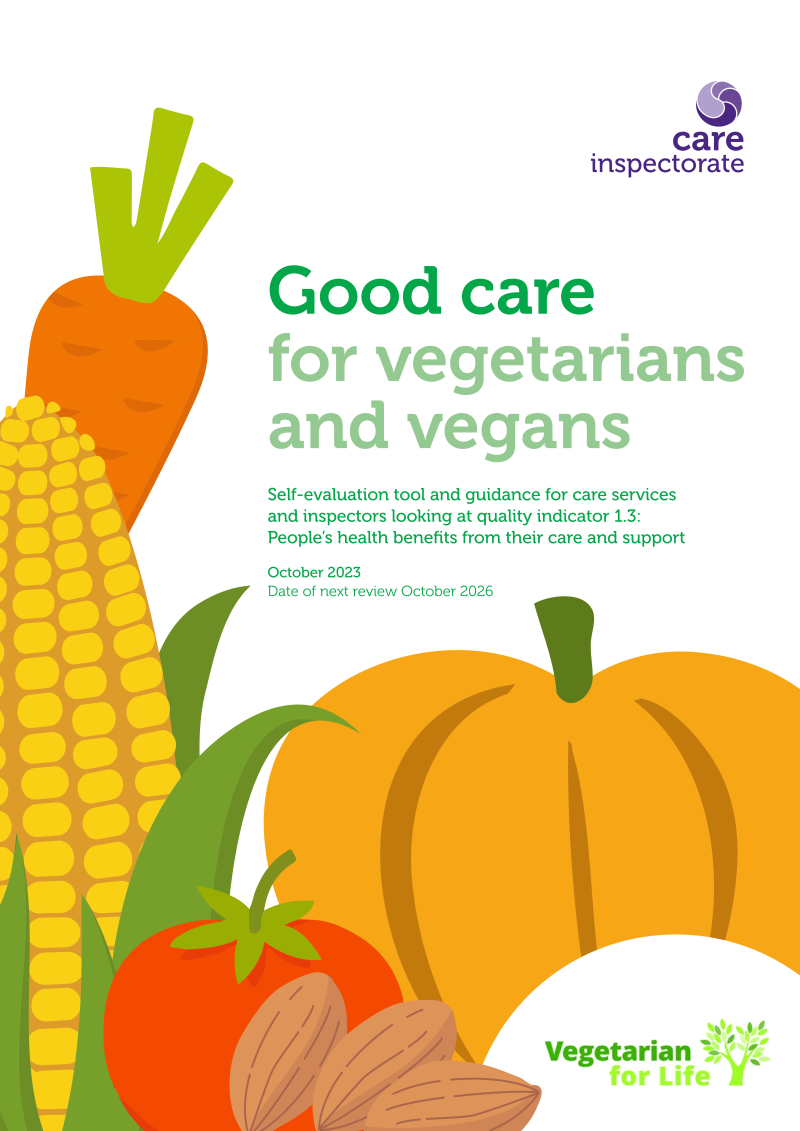
You can also explore further resources, training, and menu support on the Vegetarian for Life website.
Categories:
VfL News and Events